Village House Marble Feature Wall: Design, Cost and Installation

With high ceilings and large uninterrupted walls, Hong Kong village houses are ideal for a dramatic marble feature wall. They also bring their own considerations: rural delivery routes, wall structure and book-matching layout all need planning. This guide covers everything from material selection to installation.

Village House Marble Feature Wall: Design, Cost and Installation

Why village houses suit marble feature walls

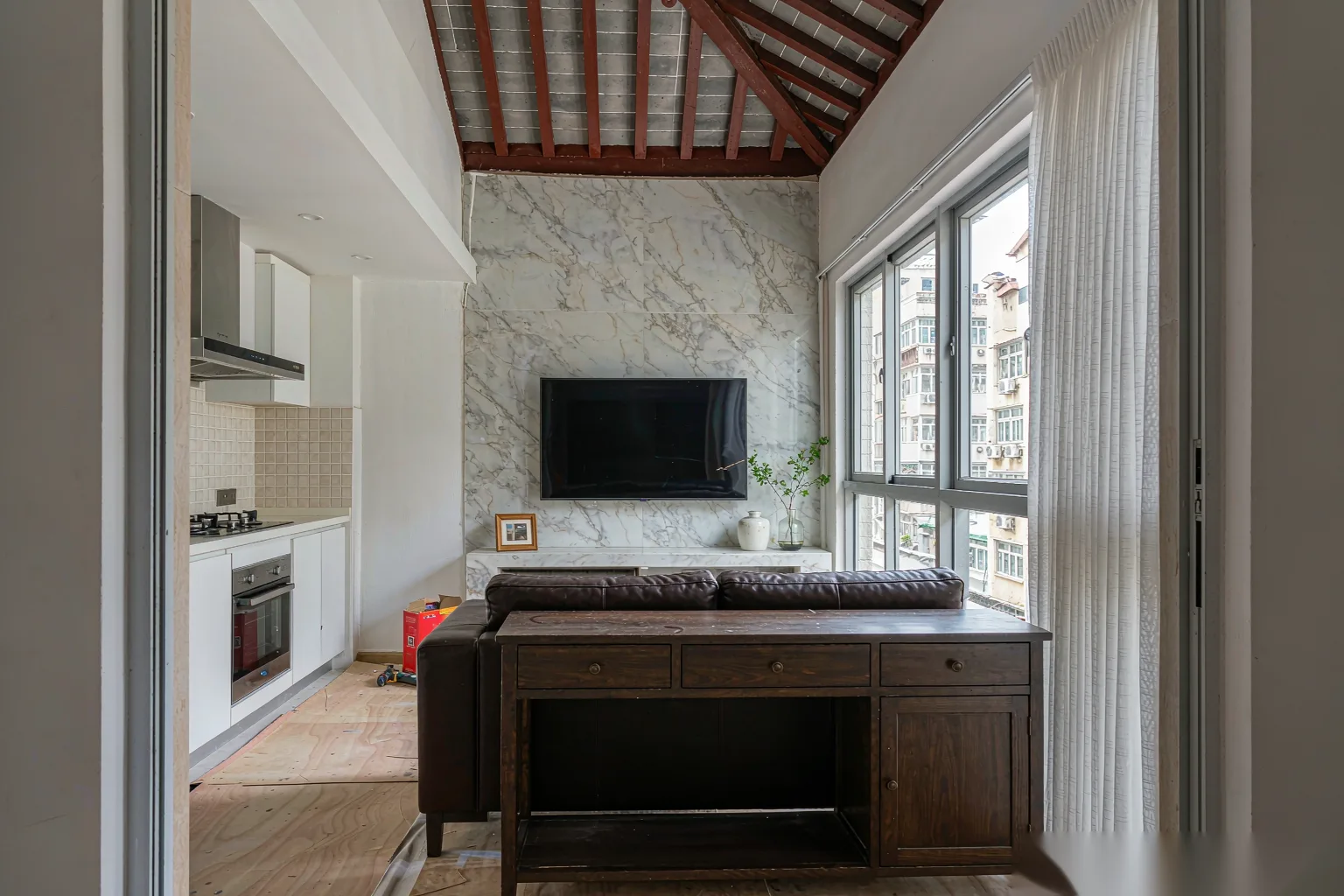
Village-house living rooms usually have no corridor columns or beams interrupting the wall, so book-matched veining can run from floor to ceiling like a natural painting; high ceilings let the stone's flow really open up. Renovation flexibility is greater too — light coves, recessed TV boxes and fireplace shapes can all be planned together, and stone pairs easily with timber and metal trims.

Choosing the material: marble, granite or sintered stone

For texture and sheen choose marble — large-vein varieties such as fish-belly whites and landscape veins are the most striking. For a matte finish that continues outdoors, granite fits. For large seamless panels with low staining risk, sintered stone is the safe choice. For marble, always request a book-matching layout drawing before cutting. View full slabs at our Mong Kok showroom to see the veining direction clearly.

How the cost breaks down

Feature-wall cost has four parts: material priced by square foot depending on variety and thickness; fabrication (matching layout, edge profiling, cut-outs); delivery (rural lane width and unloading position matter); and installation (dry-hang framework and sealant joints). The larger the wall, the more material dominates; book-matching increases wastage, so allow for it. The safest route is a free on-site measurement followed by an itemised quotation.

From measurement to installation

The process: free measurement, slab selection at the Mong Kok showroom, layout drawing confirmation, factory fabrication, then delivery and installation. A typical wall is installed within one to two days; dry-hanging carries the weight through a framework without heavy drilling, friendlier to village-house walls. Apply a penetrating sealer after installation and daily care is simply a damp cloth, avoiding acidic cleaners — the gloss lasts for years.
Design variations and pairings

A feature wall does not have to be full-slab book-matching: a cove-lighting slot that washes the stone makes its veining pop immediately; timber panels or slim metal inlays on both sides narrow the visual proportion and add layering. On a tighter budget, a half-height stone feature paired with paint or timber veneer looks just as considered — keep the focal point in stone and leave the rest in negative space, saving money while looking more designed. Consider echoing the same stone on the window sill, raised platform or staircase so one stone language runs through the home. Whichever route you take, bring the designer and stone supplier in early, so openings, light positions and edge details are settled once rather than patched afterwards.

Summary: plan thoroughly and installation takes care of itself

A marble feature wall offers one of the highest design ceilings of any village-house renovation, but its success is decided early — wall assessment, book-matched layout and the delivery route. Get these right and installation follows smoothly. It is worth repeating the common mistakes: some owners skip the layout drawing to save a little, only to discover broken veining after installation; others underestimate access and find the village road cannot take the delivery truck after ordering. Both are entirely avoidable with the right supplier from the start. Choose a source supplier backed by its own quarries and workshop — deep slab stock, strong fabrication capability, proven matching experience, and accountability if anything goes wrong. When you are ready, book a free measurement, or visit our Mong Kok showroom to view full slabs and discuss the design.

Further Reading

Frequently Asked Questions

Is a village-house feature wall expensive?

Cost depends on variety, area and workmanship. After a free measurement you receive an itemised quotation — material, fabrication, delivery and installation listed separately, with no hidden charges.

Is the stone too heavy for the wall?

A dry-hang framework carries the weight through the wall structure; most village brick or concrete walls handle it. The wall condition is assessed on site before ordering.

Is delivery to village houses difficult?

Rural delivery is a matter of experience: vehicle size and handling are planned around lane width, corners and unloading positions — just describe the site when ordering.

Does a feature wall need yearly maintenance?

A penetrating sealer is applied once after installation and topped up every 6 to 12 months; day-to-day care is just dusting with a damp cloth. A residential feature wall does not need intensive maintenance.

↑